

Chasing Sparks: A Walk with Beyoğlu’s Legendary Mobile Sharpeners
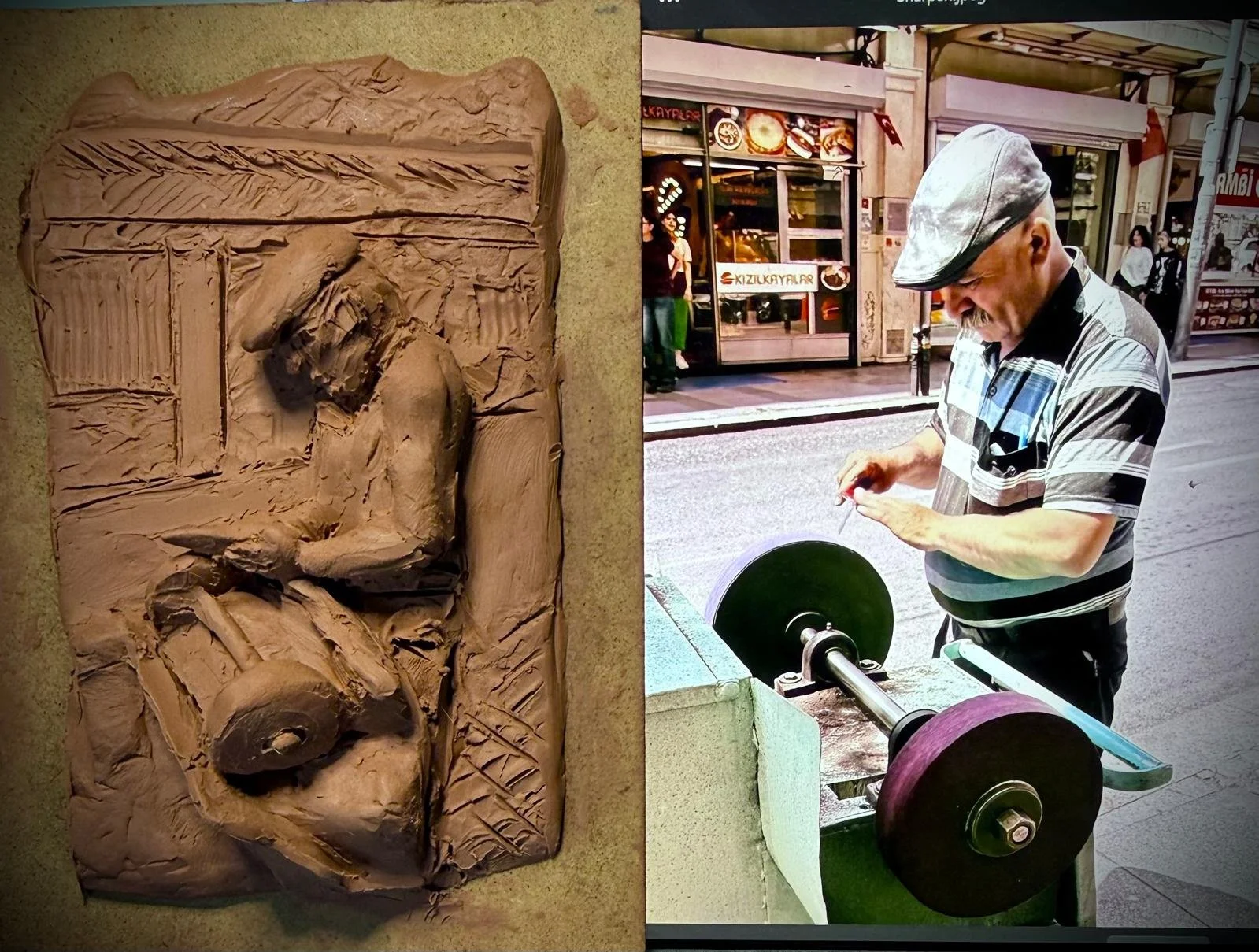
If you spend enough time wandering away from the neon glow of Istiklal Avenue and plunge into the steep, cobblestone labyrinth of Beyoğlu, you will eventually hear it.
It starts as a rhythmic, metallic scrape, followed by a bright shower of orange sparks illuminating a shadowy Ottoman-era alleyway. Then comes the call, echoing off the neoclassical facades: “Bileyiciii! Hanımlar, beyler, bıçaklar bileyiciii!” (Sharpener! Ladies, gentlemen, knives to sharpen!)
This is the sound of the bıçak bileyicisi—the mobile street knife sharpener. In a mega-city rapidly digitizing and rushing toward the future, these craftsmen are walking archives of Istanbul's neighborhood-centric history. For travelers seeking authentic Turkish culture or researching disappearing trades, understanding this ancient craft offers an intimate look into the city's living heritage.
I laid out this one hour quick-sketch relief in the street and finished it at home.
The Living History of the Bileyici (Istanbul Knife Sharpeners)
Street vending has always been the lifeblood of Istanbul’s neighborhoods (mahalles). For centuries, everything from fresh yogurt (yoğurtçu) to old clothes (eskici) was traded right at the doorstep. The bileyici belongs to this proud, disappearing lineage of traditional Turkish artisans.
Historically, these sharpeners didn’t just service home kitchens. They were the backbone of Beyoğlu’s diverse daily operations, maintaining the tools for:
The Grand Restaurants & Meyhanes: Keeping the heavy cleavers razor-sharp for chopping lamb and dicing herbs for traditional mezes.
The Tailors of Pera: Sharpening the heavy, industrial iron shears used by Levantine and Armenian tailors crafting suits for Istanbul's elite.
Local Barbers: Precision-honing the straight-edge razors used for traditional Turkish shaves.
What makes their practice fascinating is the sheer ingenuity of their gear. Long before electric grinders plugged into walls, a bileyici carried his entire livelihood on his back or pushed it on a custom wooden wheelbarrow. Using an ingenious foot-pedal system connected to a leather belt, they would spin a heavy grinding stone solely using leg power—a sustainable design that has remained virtually unchanged for over a century.
Why Beyoğlu Matters: The Heart of Istanbul's Street Culture
While you can still catch a knife sharpener in various historic pockets of Istanbul (like Fatih or Üsküdar), their presence in Beyoğlu carries a unique cultural weight.
Beyoğlu has historically been Istanbul’s cosmopolitan melting pot—a place where European architecture meets Eastern street life. When a bileyici sets up his cart under a beautifully carved 19th-century balcony, a striking collision of cultures occurs. The high-brow elegance of old Pera meets the gritty, hardworking reality of Anatolian trade traditions.
Furthermore, these tradesmen act as human threads that hold the local community together. When a bileyici parks his cart on a corner, neighbors lean out of their windows to lower knives in baskets tied to ropes. Shopkeepers step out of their boutiques to hand over their kitchen blades and chat while waiting. In those few minutes, a busy street transforms into a communal living room, offering a prime example of Turkiye’s intangible cultural heritage.
An Endangered Cultural Legacy: The Future of the Craft
Today, the mobile knife sharpener is an endangered cultural treasure. The rise of cheap, disposable kitchenware, electric counter-top sharpeners, and the rapid gentrification of historic neighborhoods mean fewer apprentices are willing to take up the foot pedal. Most of the sharpeners you see today are older men, navigating Beyoğlu’s punishingly steep hills with heavily laden carts out of sheer dedication to their lifelong craft.
To lose the bileyici is to lose more than just a convenient home service. It means losing the intangible sensory history of Istanbul—the smell of hot steel, the flash of sparks in a dim alleyway, and the melodic cadence of a street cry that has survived empires.
For modern travelers and cultural historians looking to experience the true essence of Türkiye, these artisans are irreplaceable. The next time you find yourself getting lost in the backstreets of Cihangir or Çukurcuma and hear the scraping of steel against stone, slow down. Stop, watch the sparks fly, and appreciate a master class in living history.
Frequently Asked Questions about Istanbul's Knife Sharpeners
What is a traditional Turkish knife sharpener called?
A traditional mobile knife sharpener in Turkey is called a bıçak bileyicisi (or simply bileyici).
Where can you still find street vendors in Istanbul?
While disappearing, traditional street vendors like the bileyici, eskici (old goods seller), and boza vendors can still be found in historic neighborhoods such as Beyoğlu, Cihangir, Fatih, and Balat.
What is the historical significance of the bileyici?
They represent centuries of neighborhood-centric trade (mahalle culture) in the Ottoman Empire and modern Turkey, serving as self-sufficient, mobile artisans who sustained local businesses before the age of automation.